What Became of Vanessa Clarke? The Mystery of a 1960s Costume Designer
This was originally posted to my Substack.
Sometimes my research comes to a dead-end after dead-end—I’ll follow every path I can think of, set it aside for a few months or even years, then try again, following new ideas to no avail. Usually, I then tuck it away indefinitely. This time, I’m going to try something new and share with you a very patchy history. Quite often, I write about someone here, and then months or years later, I receive an email or a DM from a child, grandchild, niece, nephew, or friend who has recently come across my biographical newsletter and wants to thank me for remembering their loved one. Perhaps by sharing this incomplete history, I’m hoping for a similar discovery: a family member or friend will come forward and fill in the gaps, letting me know what actually became of costume designer Vanessa Clarke.
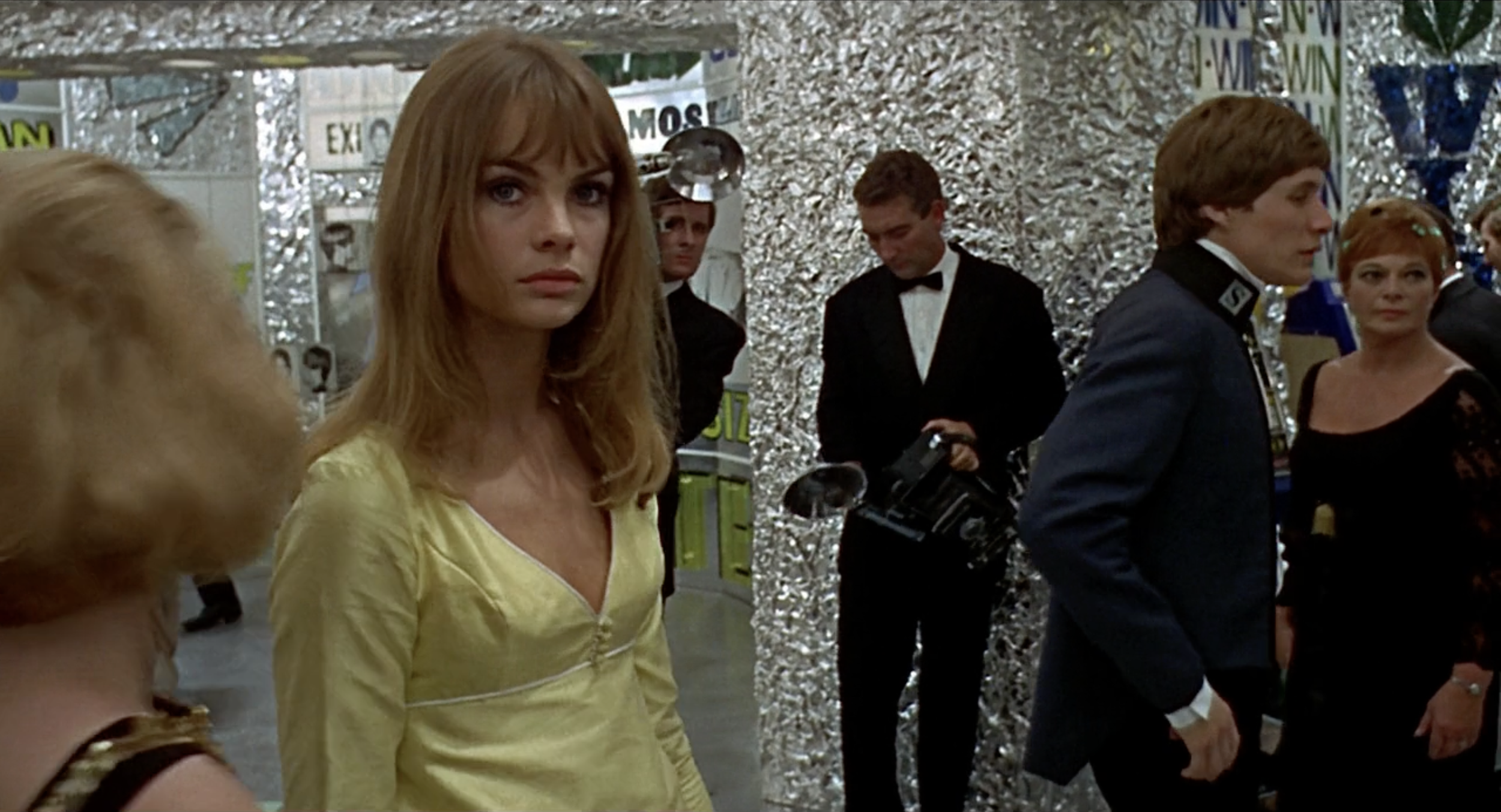
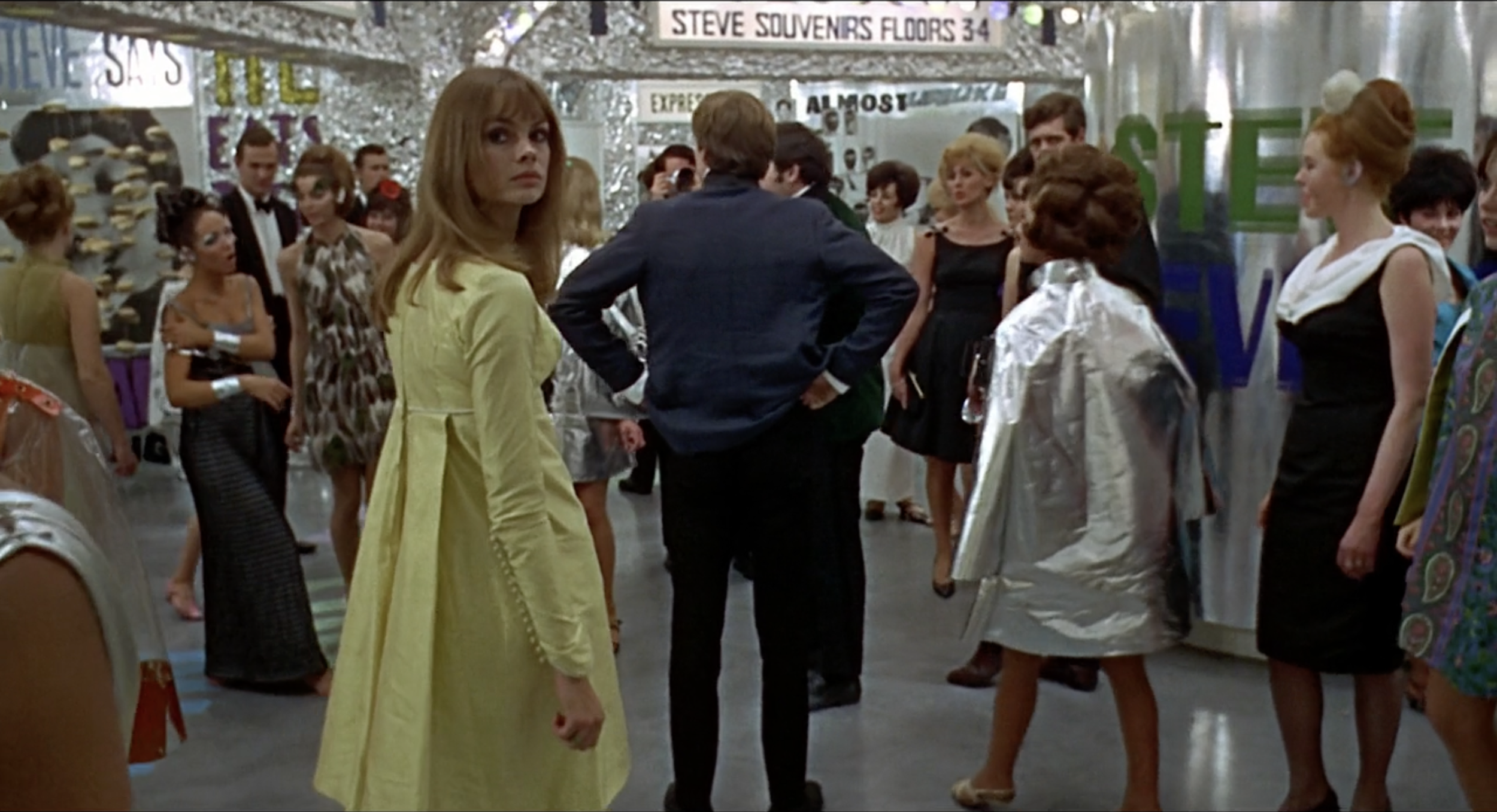
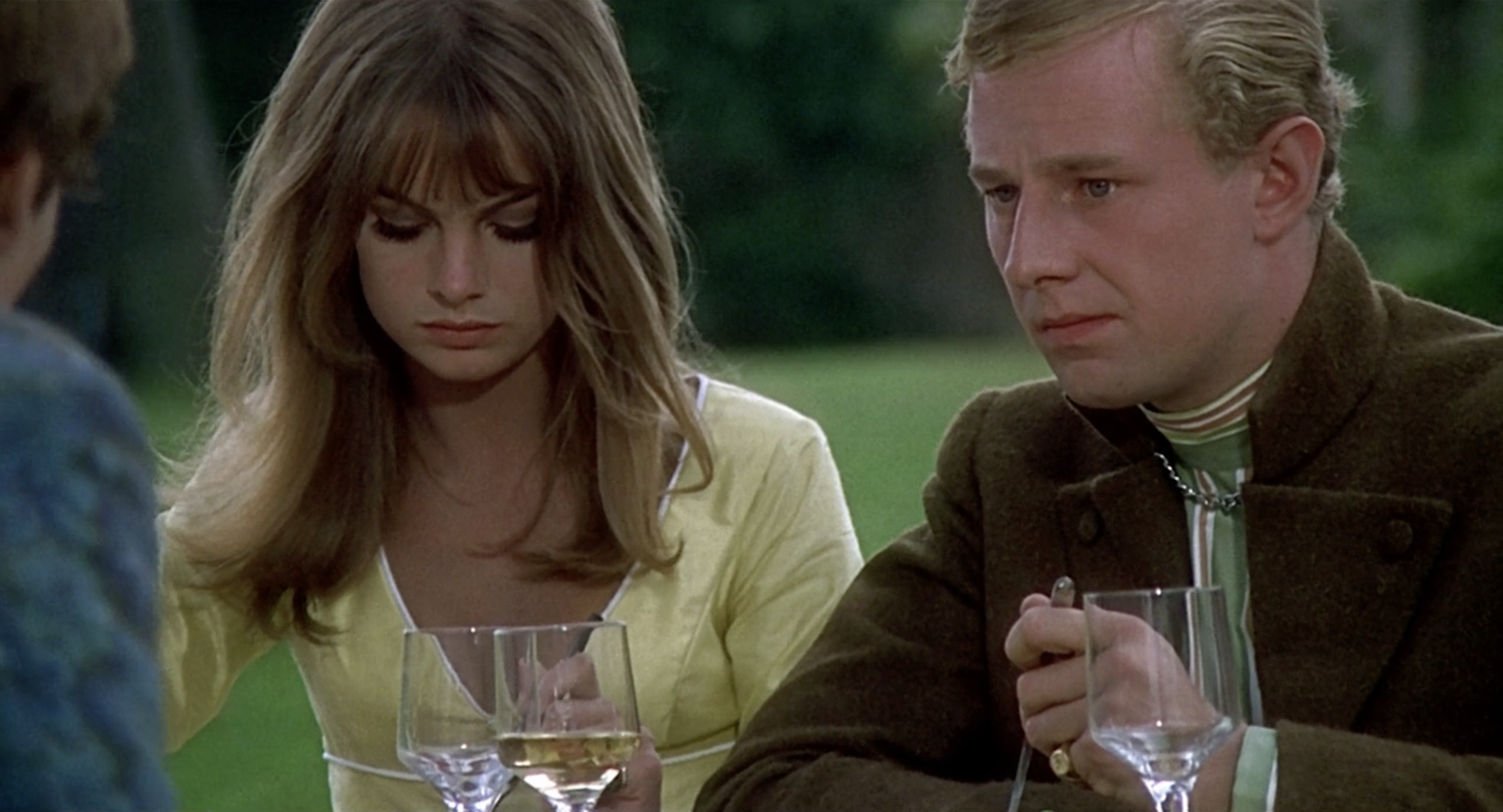
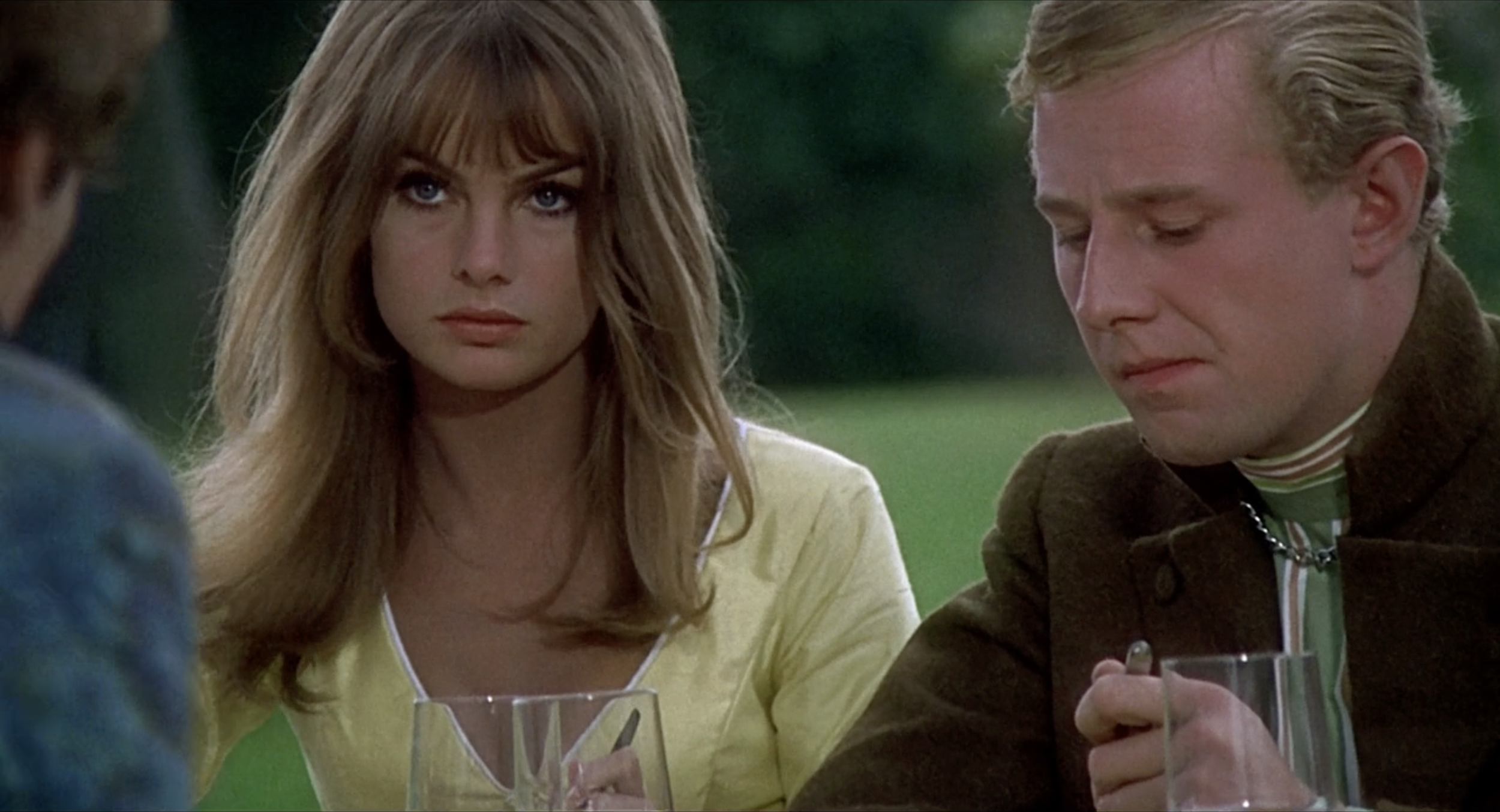
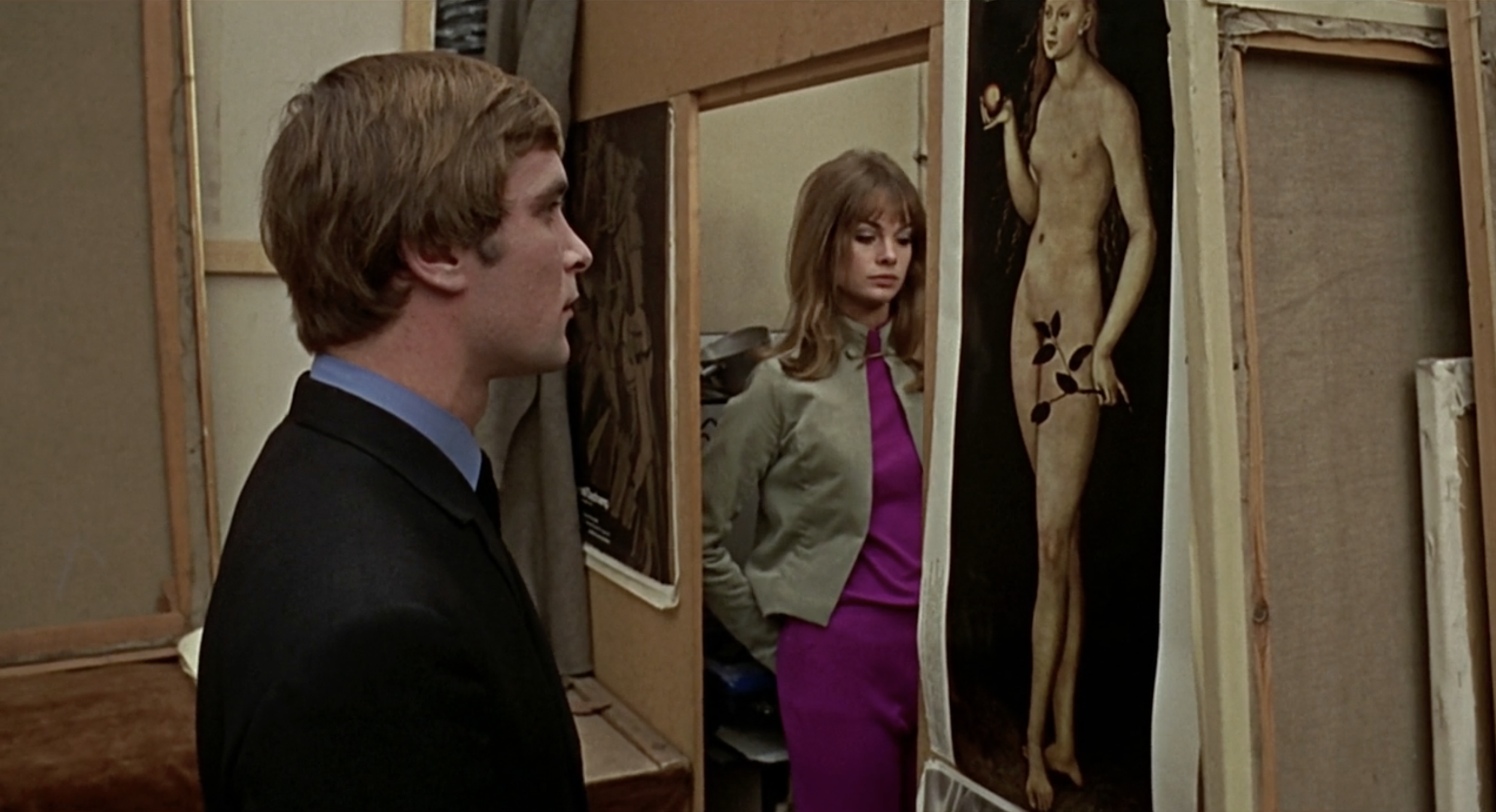
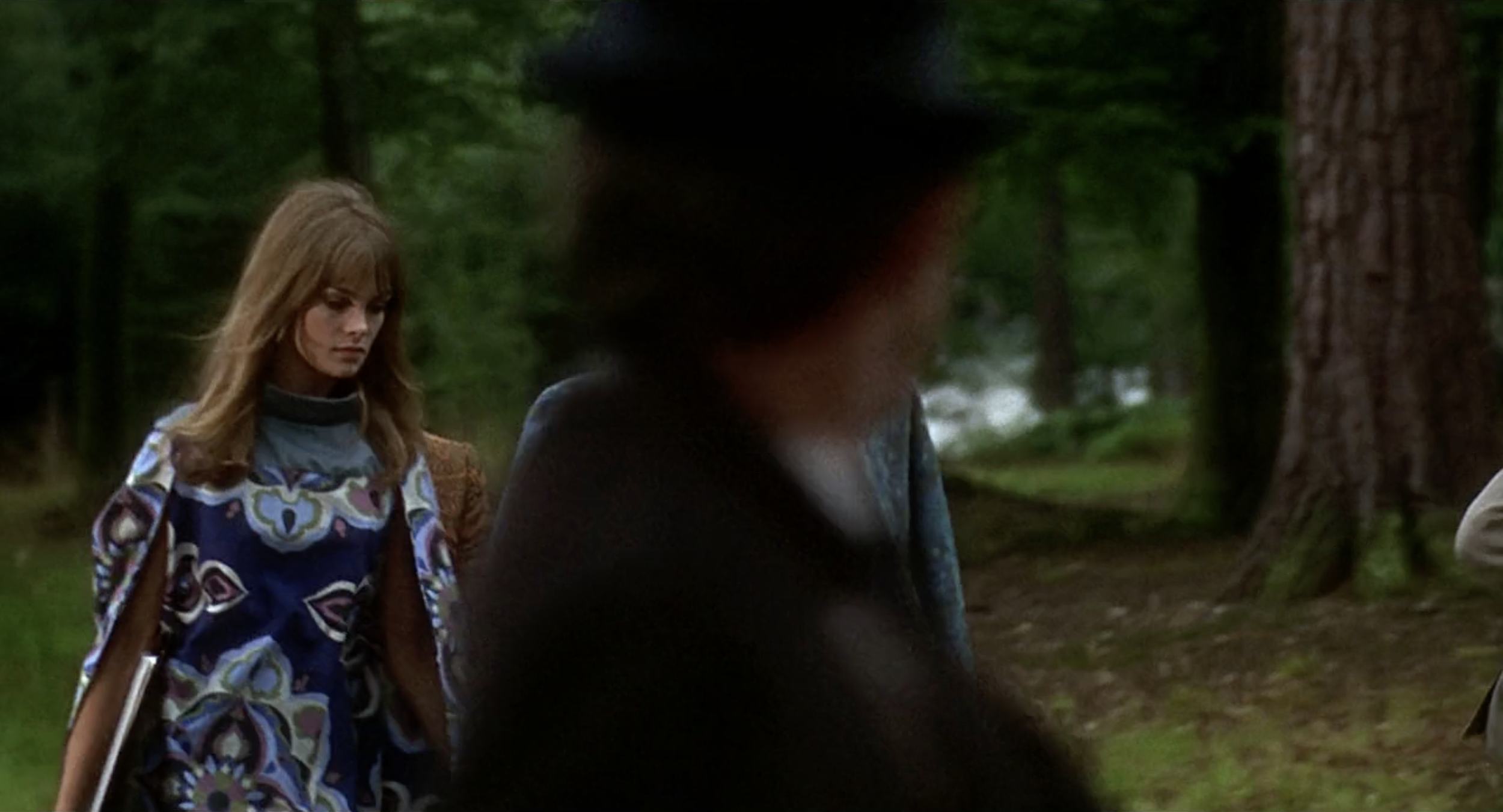
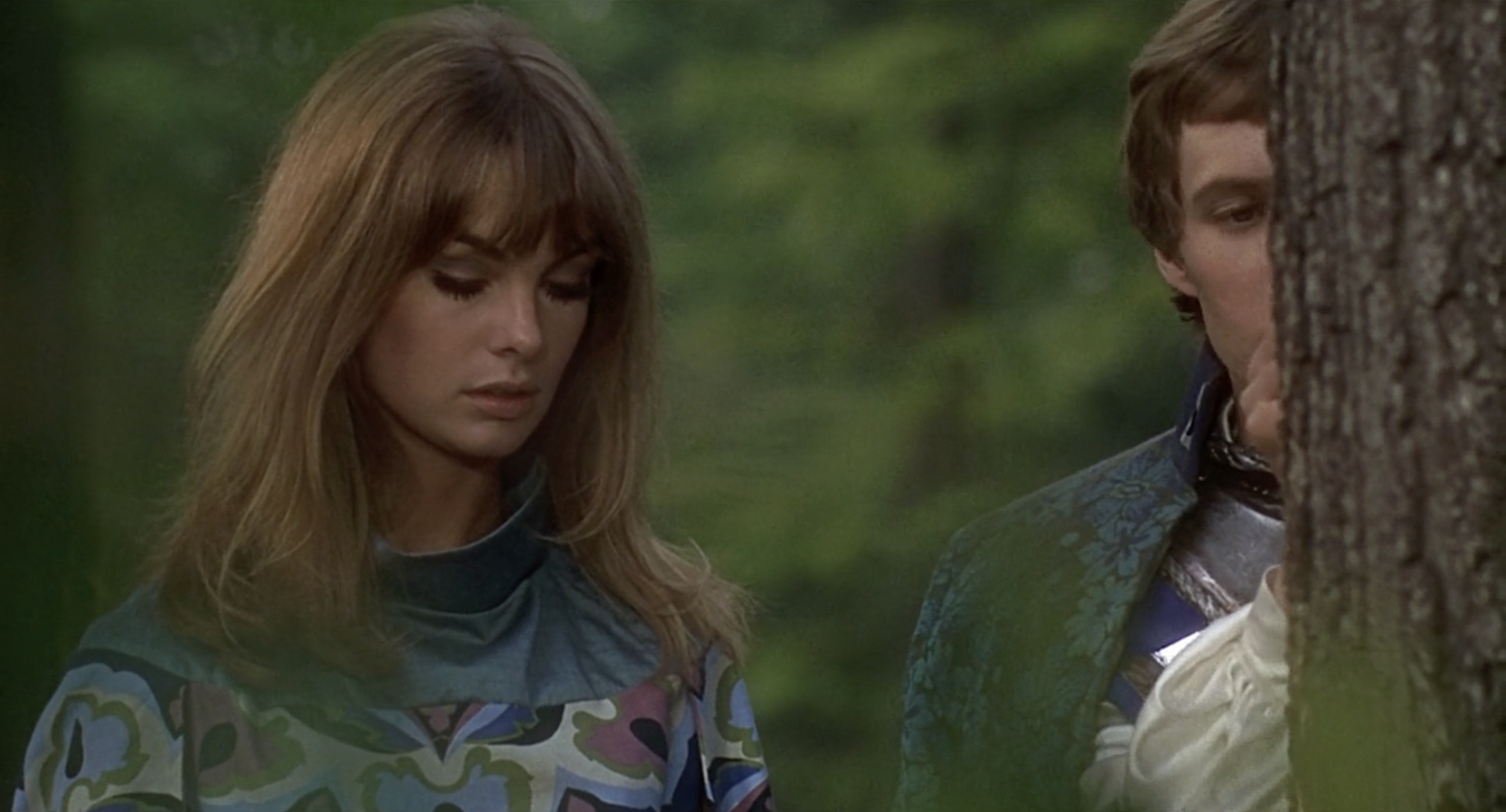
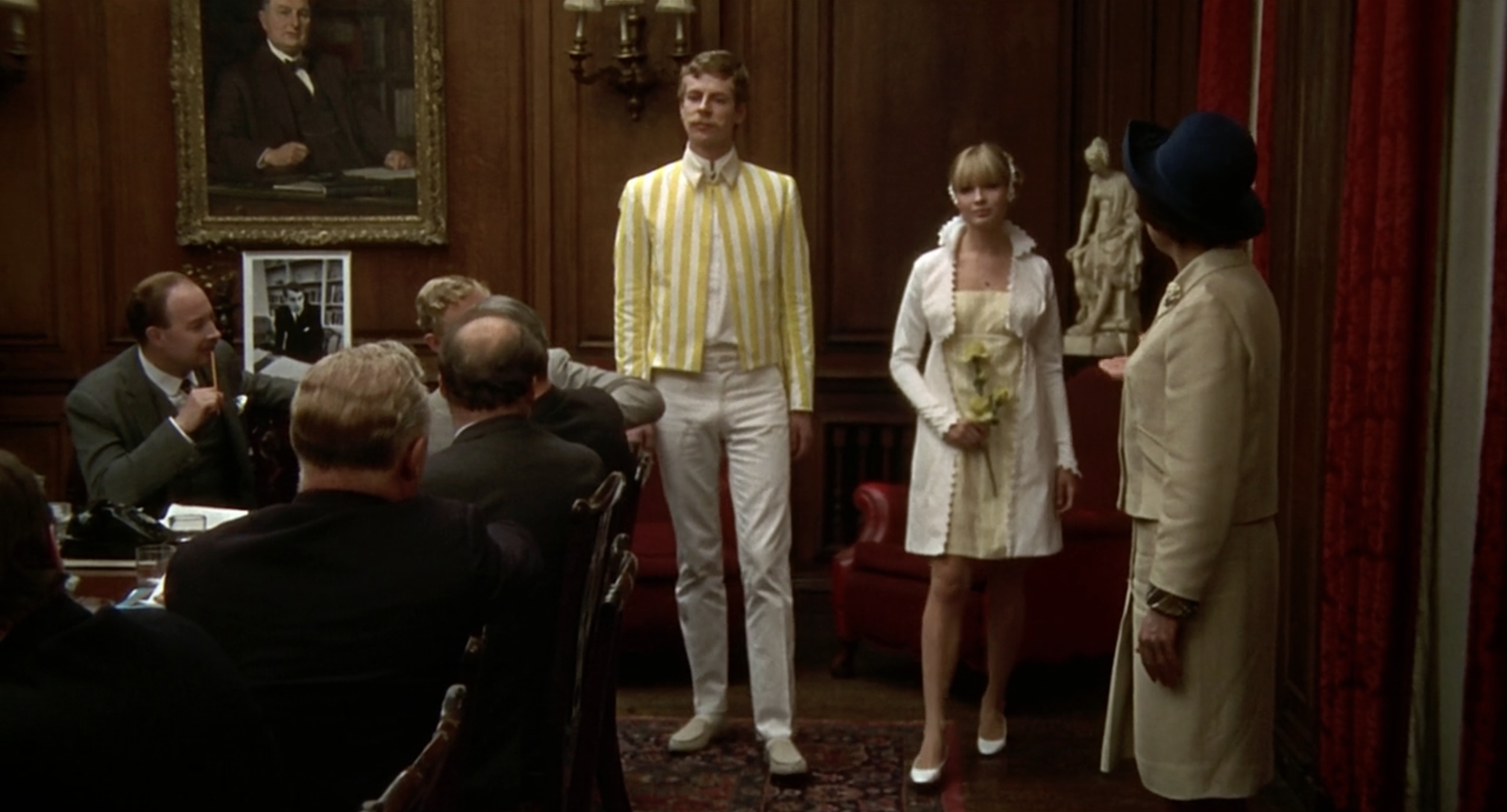
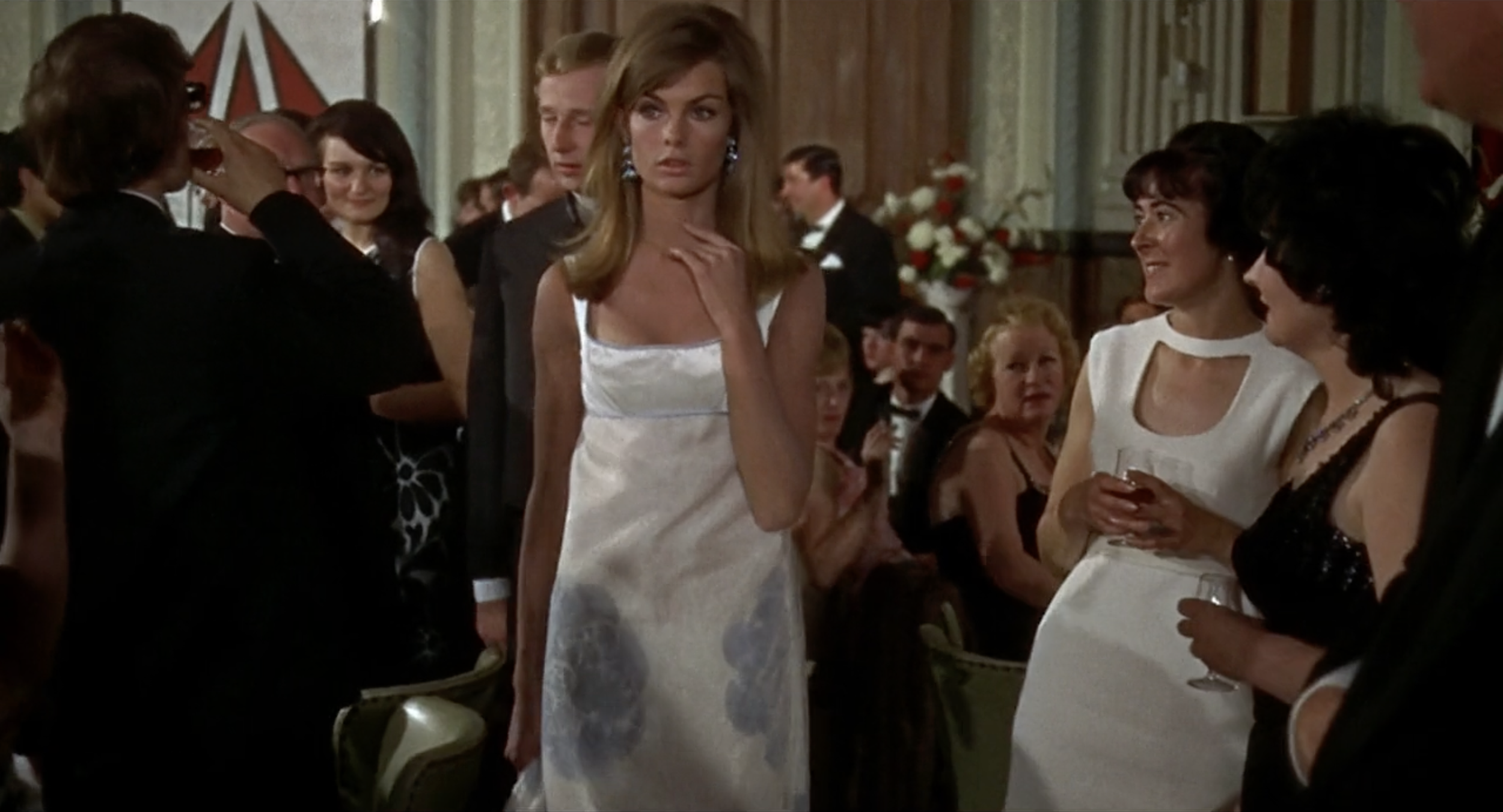
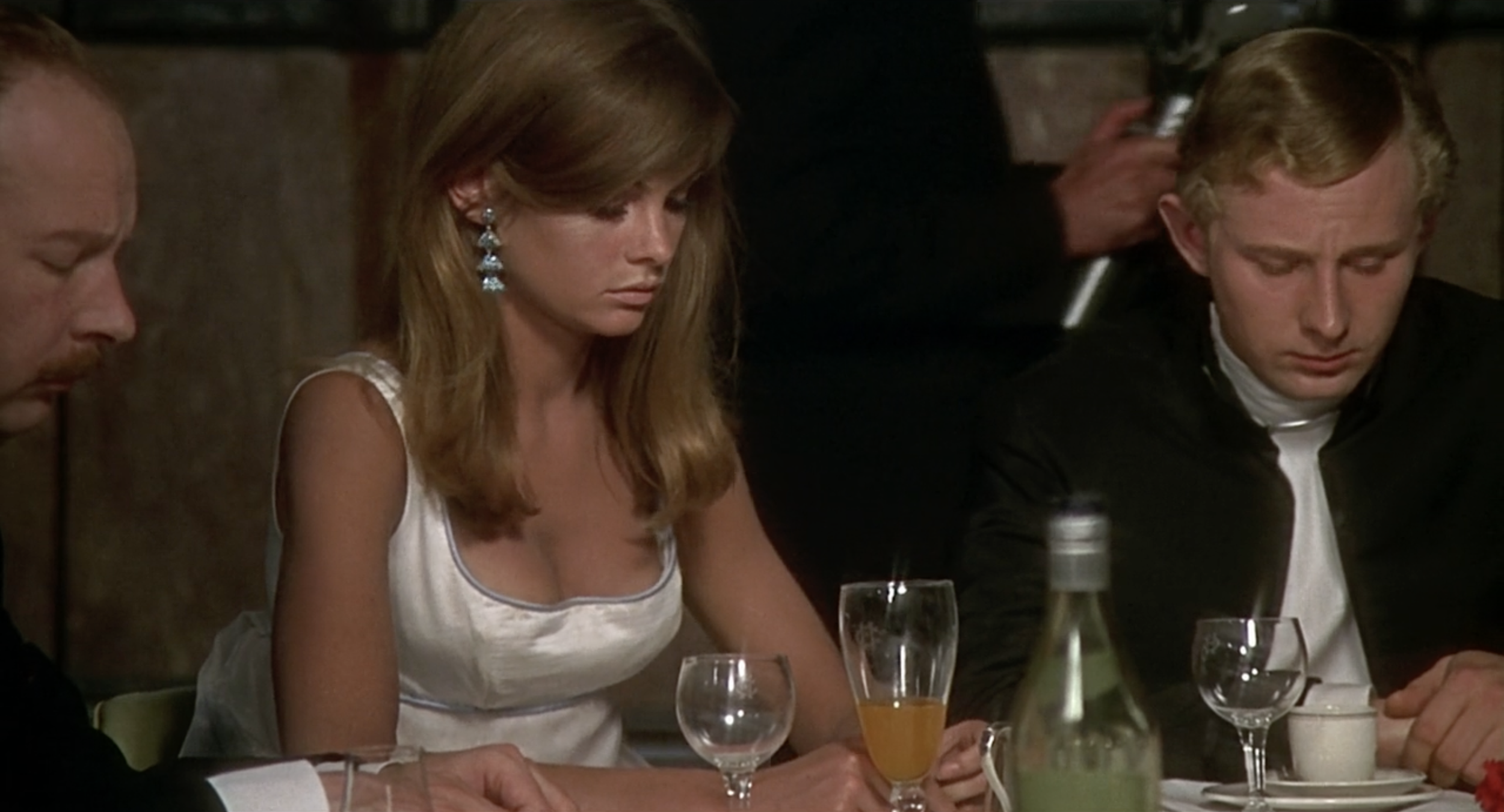
I first became interested in Vanessa Clarke through her costumes for the 1967 satirical film, Privilege—most notably the little silk mod dresses worn by the film’s star, supermodel Jean Shrimpton. Known as “The Shrimp,” Jean Shrimpton was, at that time, the most famous and most expensive model in the world. Seeking something new, she agreed to take well below her normal rate for her first feature film, playing the role of an artist hired to paint a portrait of the world’s most famous pop star (played by real-life pop star Paul Jones of Manfred Man), who then has an affair with him. If Privilege was supposed to make her a movie star, it failed; not only was her acting stilted in the few scenes she was in, but both critics and (particularly) the public found the movie difficult. Set in the near future of a dystopian Britain in 1970, “this powerful film is a cold-blooded look at the corruption of modern society as seen through the pop culture of the ‘60s and its heartless merchandising methods. [Director Peter] Watkins shows how a teenage idol is used by money powers, the State and the Church to control man’s mind and to deny one’s individuality.” Likely too close for comfort, British critics responded to the film largely with anger, calling it “hysterical,” and, according to Peter Watkins’ website, “The national cinema circuit in the UK, J. Arthur Rank, refused to show the film for something to do with what they deemed its ‘immoral nature’. Universal Pictures withdrew the film after brief screenings in a few countries, and the film has been rarely shown since—very occasionally on TV.” Regardless, Shrimpton is luminous as she pads around groovy parties and banquets in little silk empire-waist dresses—all made for her by the then-24-year-old Vanessa Clarke.
Once I started researching Clarke, I found very little. According to IMDB, Privilege was her second film—she previously worked with Peter Watkins on The War Game in 1965—but she did not do costumes for another movie for almost 20 years, until she worked on Space Riders in 1984 and Car Trouble in 1986. Who was Vanessa Clarke? And why did she have such huge gaps in her career? Below is the little I’ve been able to piece together.
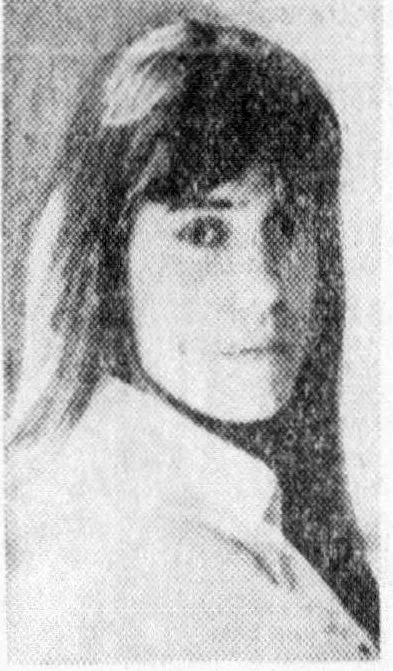
One of the only photos I found of Vanessa Clarke, published in the Pittsburgh Press, June 13, 1967.
News reports on Privilege stated that Clarke was 24 in 1967. When I looked back through British birth records, I found only one that was likely her: a Vanessa A.A. Clarke was born in the borough of Greenwich in March 1944. While she was a small child, her parents divorced, and in June 1949, her mother remarried to Harold Gregson. The family lived in the quaint village of Brenchley, Kent, at a home called “Broad Oak Lodge.” While I’ve been unable to find that exact house, it was likely located on the little road of Broad Oak, filled with charming country cottages. She attended Benenden School, a private girls’ boarding school—though only a half hour away by car, she likely boarded—a few years before Princess Anne would become a pupil. In 1960, at age 16, her mother gave a series of small dances at home for her “coming out” that were listed in society magazine The Tatler.
It appears that Clarke forewent art school or university and instead started working straight after school. By the summer of 1962, Vanessa Clarke was working as a scenic painter at the new Chichester Festival Theatre, a project overseen by Sir Lawrence Olivier. She appears to have moved over to working at the BBC, where she did costumes for a few TV episodes and a TV movie in 1964 and 1965. During this period, she met Peter Watkins while he was working as an assistant editor there. When his first full-length television film, Culloden, drew critical acclaim for its new form and scope—it “portrayed the Jacobite uprising of 1745 in a documentary style, as if television reporters were interviewing the participants and accompanying them into battle” —the BBC commissioned Watkins him to make a nuclear war docudrama, The War Game, for its The Wednesday Play series. Watkins hired Clarke to design the costumes for the film, a sort of pseudo-documentary about a present-day nuclear attack told in the style of a news magazine program. She later described that experience as, “Bonfires every morning in the garden to get a tatty, burned effect, and lots of soot and flour.”
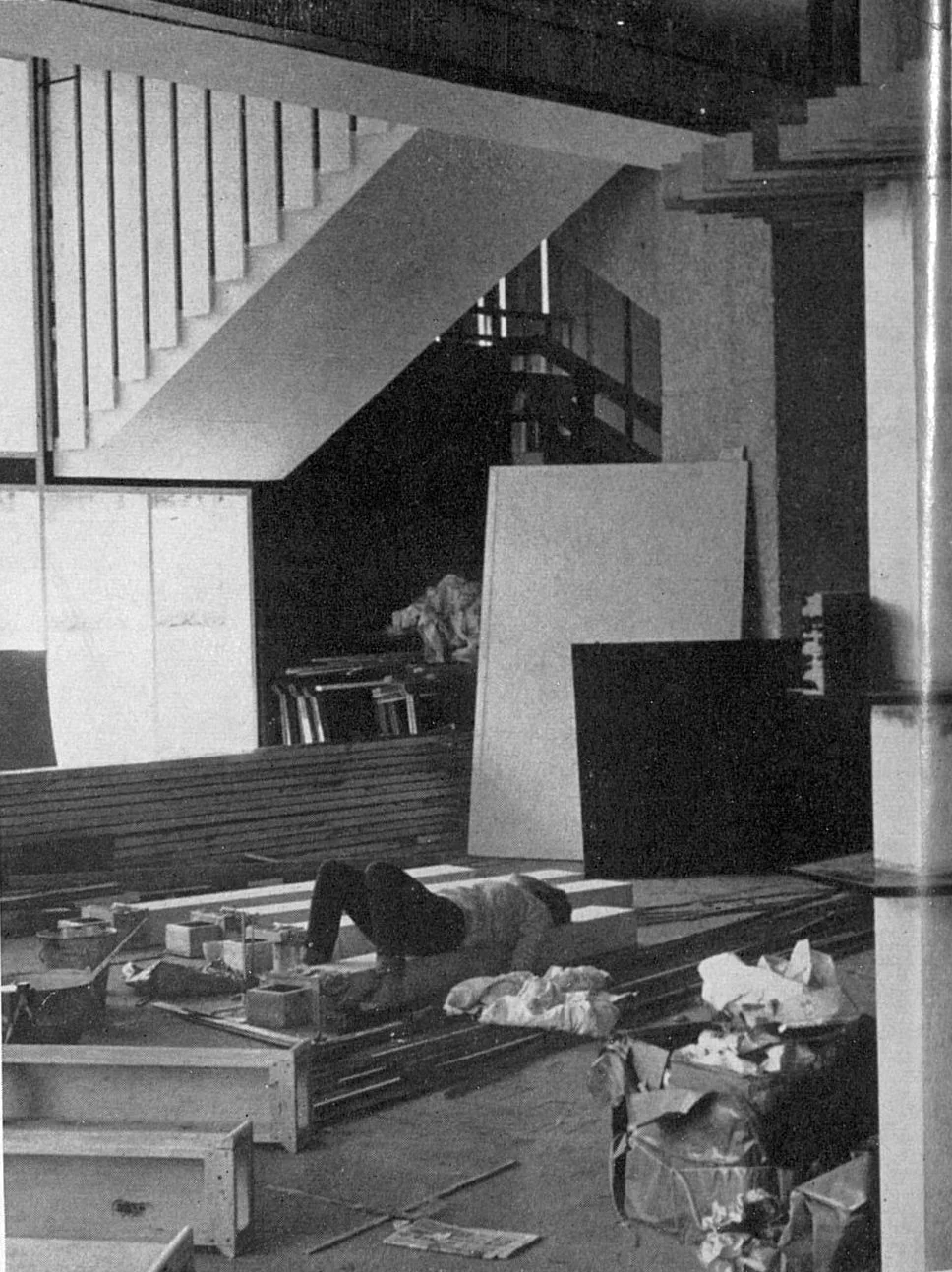
“Scenic artist Vanessa Clarke flat out after hectic last-minute preparations” before the opening of the Chichester Festival Theatre. Photo by Alan Vines, The Tatler, July 4, 1962.
The War Game’s incredibly realistic portrayal of nuclear war was deemed too much for the general public; the BBC and the British government withdrew the film from television broadcast, as “the effect of the film has been judged by the BBC to be too horrifying for the medium of broadcasting. It will, however, be shown to invited audiences...” It went on to be released in cinemas in 1966, before winning the Academy Award for Best Documentary Feature in 1967. That success opened the door for Watkins to make his first non-television feature, Privilege, for which he again wanted to work with Clarke—it was also their first project in color.
Vanessa Clarke did only one interview about the costumes for Privilege, for the British teen fashion magazine Petticoat, which provides a revealing glimpse at the production process:
“Shooting in Birmingham was chaotic. In one scene there were 600 outfits that meant 600 fittings, and during the shooting of it, 3,000 fans suddenly broke loose and hounded Paul. Privilege had to stop.”
Neither Vanessa Clarke, who was speaking, nor Peter Watkins, who was directing, were particularly worried. Peter Watkins is used to the hazards of filming. And Vanessa, the film’s costume designer, has an outstanding quality – efficiency.
She is 24, tall, slim and brown-haired. She met Peter Watkins at the BBC and worked on The War Game (”Bonfires every morning in the garden to get a tatty, burned effect, and lots of soot and flour.”) Then, in only eight weeks, she designed and had made up more than 70 complete outfits and hundreds of other costumes for Privilege – some of which will be manufactured by Alexander Greene, and available, later, throughout the country. Not only is it her first full-colour feature film, but its stars are the world’s top model and a leading pop singer. This is how she describes her challenge:
“The big problem was to put everyone in clothes that didn’t look like today but weren’t as way-out as science fiction. Take hem-lengths: they’ll be down by 1970, but this year they’d have looked dotty.”
“Girls today could wear old tin cans and nobody would look twice. But men’s clothes are dull so they were more interesting to design – l could make them less conventional. In the film they’re very simple. Hardly any patterned fabrics, zips or buttons but interesting textures and big silver studs.
“I don’t think Jean really is interested in clothes. That is, not nearly as much as I am, for instance. But I suppose that’s because she’s surrounded by them all day. I don’t think she’s one of the great actresses, but people won’t come out saying: ‘She’s rotten. That’ll show her.’
“Paul is very intelligent and very good as Steven Shorter. He’s good to work with and we got on well. Luckily he liked all the clothes I designed for him – they’re Regency styled – so I’m making a silver suit and a fabric-patterned shirt for his stage appearances, which is nice.
“Difficulties mostly come on location. You load costumes in a van (remembering every single thing, you hope!) for the day’s shooting, unload them in the and then pack another lot up in the van for the next day. That’s fine if everything goes okay...
“But Peter will suddenly change his mind and re-write a whole scene overnight. No – not overnight – the same day. Then you have to think again. After a while though, you fail in with him and get to know the sort of thing he might do. But your resources count quite a lot when another 20 scenes suddenly appear.
“In the end you do get a bit philosophical about it. You have to! But – it’s nice doing something you really enjoy – then it’s not like work at all. The film is fantastic. Peter knows what he’s doing so you just have to have faith in him. And whether people like or hate Privilege, they’ll certainly notice it…”
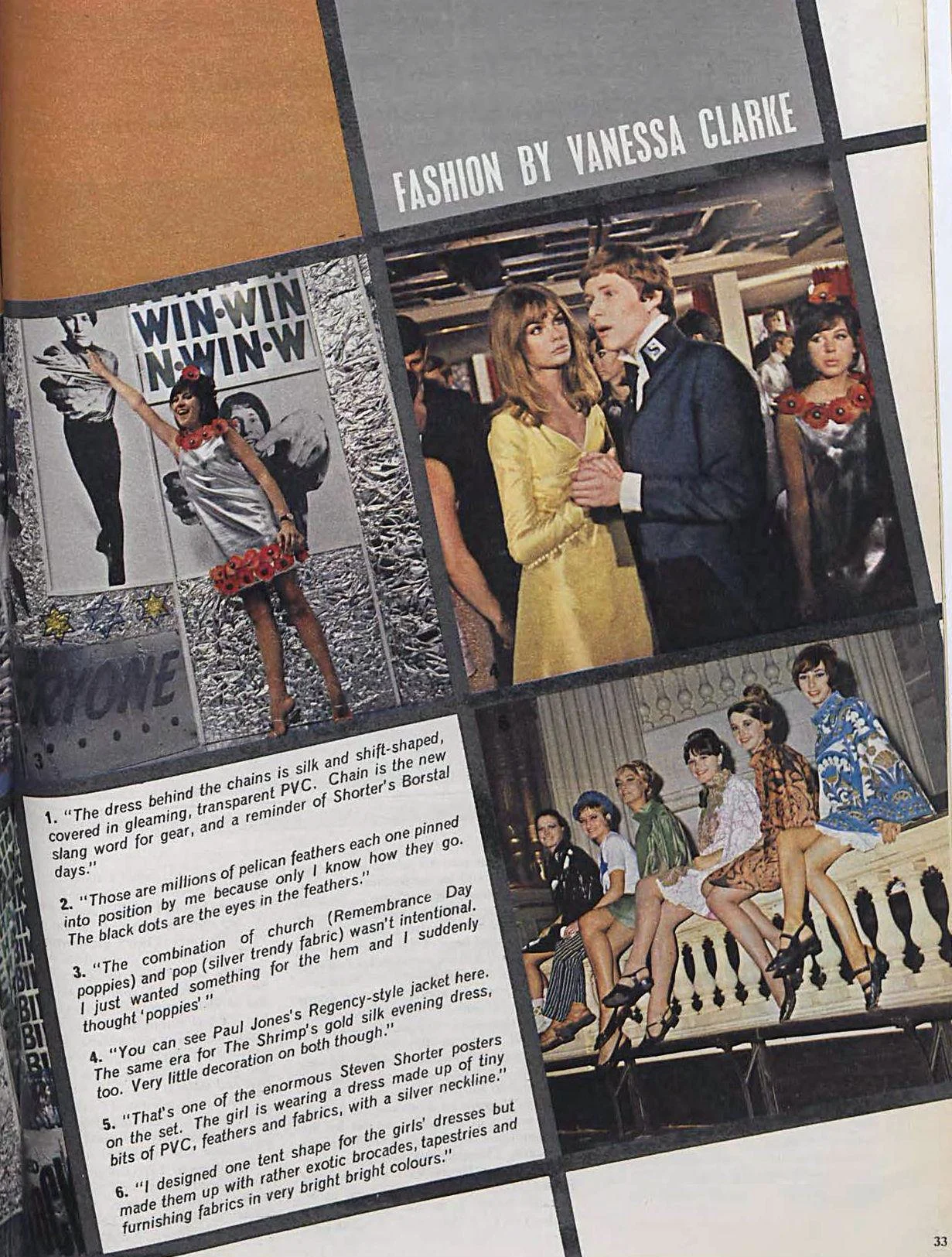
Vanessa talking about her costumes, Petticoat, February 18, 1967
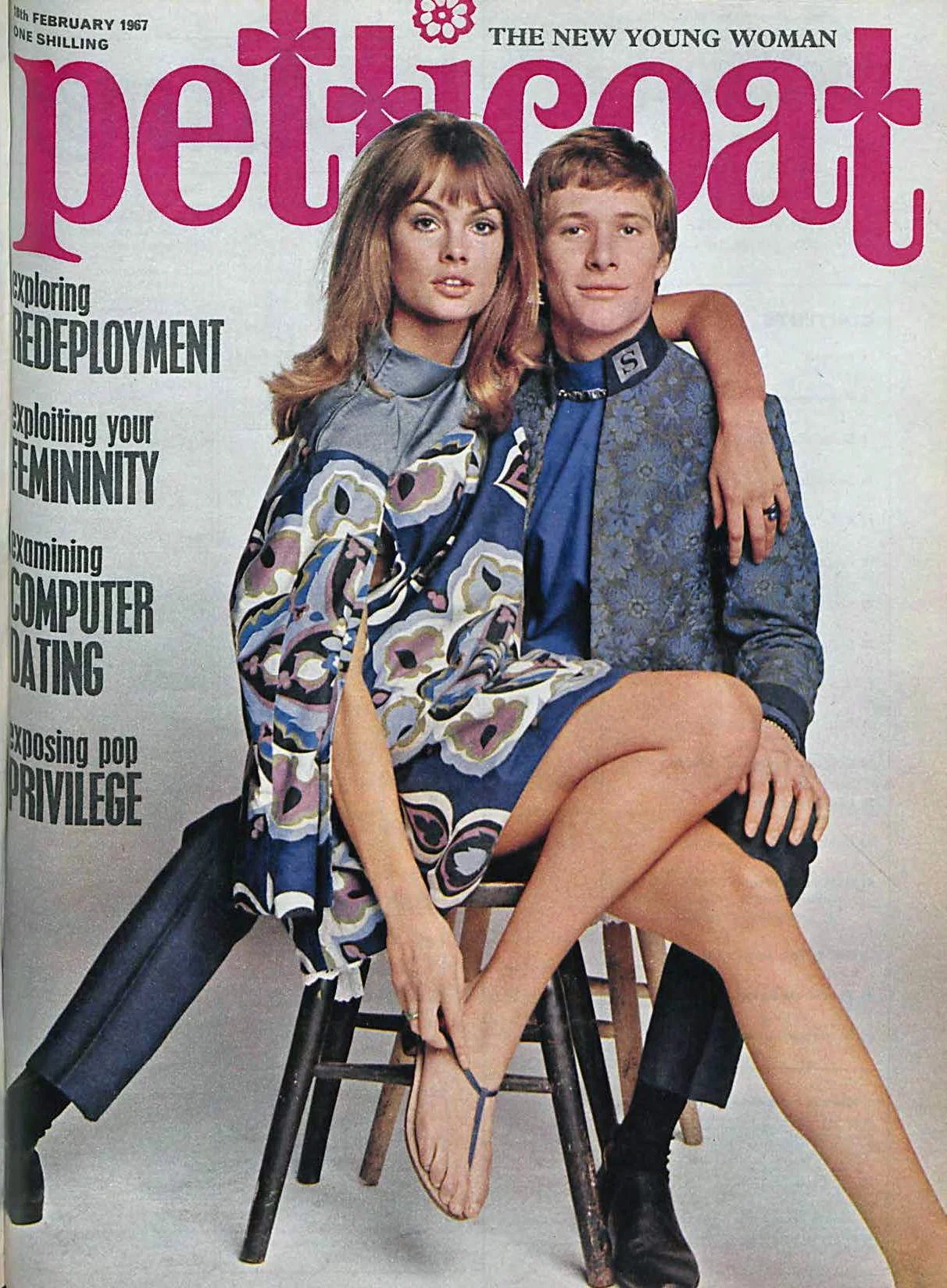
Jean Shrimpton, in one of the costumes from the film, posing with co-star Paul Jones. Petticoat, February 18, 1967
Paul Jones had similarly positive things to say about her designs for him; he told Women’s Wear Daily, “I like most of the clothes I had to wear in the film… good materials. Some of the jackets and shirts were absolutely beautiful . . . slightly Regency.” He was less bullish on the women’s looks: “But the designer [Vanessa Clarke, a young unknown television designer] tried too hard with some of Jean Shrimpton’s dresses... and with the dresses for the dollies [fans]. It’s a very tall order producing clothes for 1970… but a couple of things are just great.”
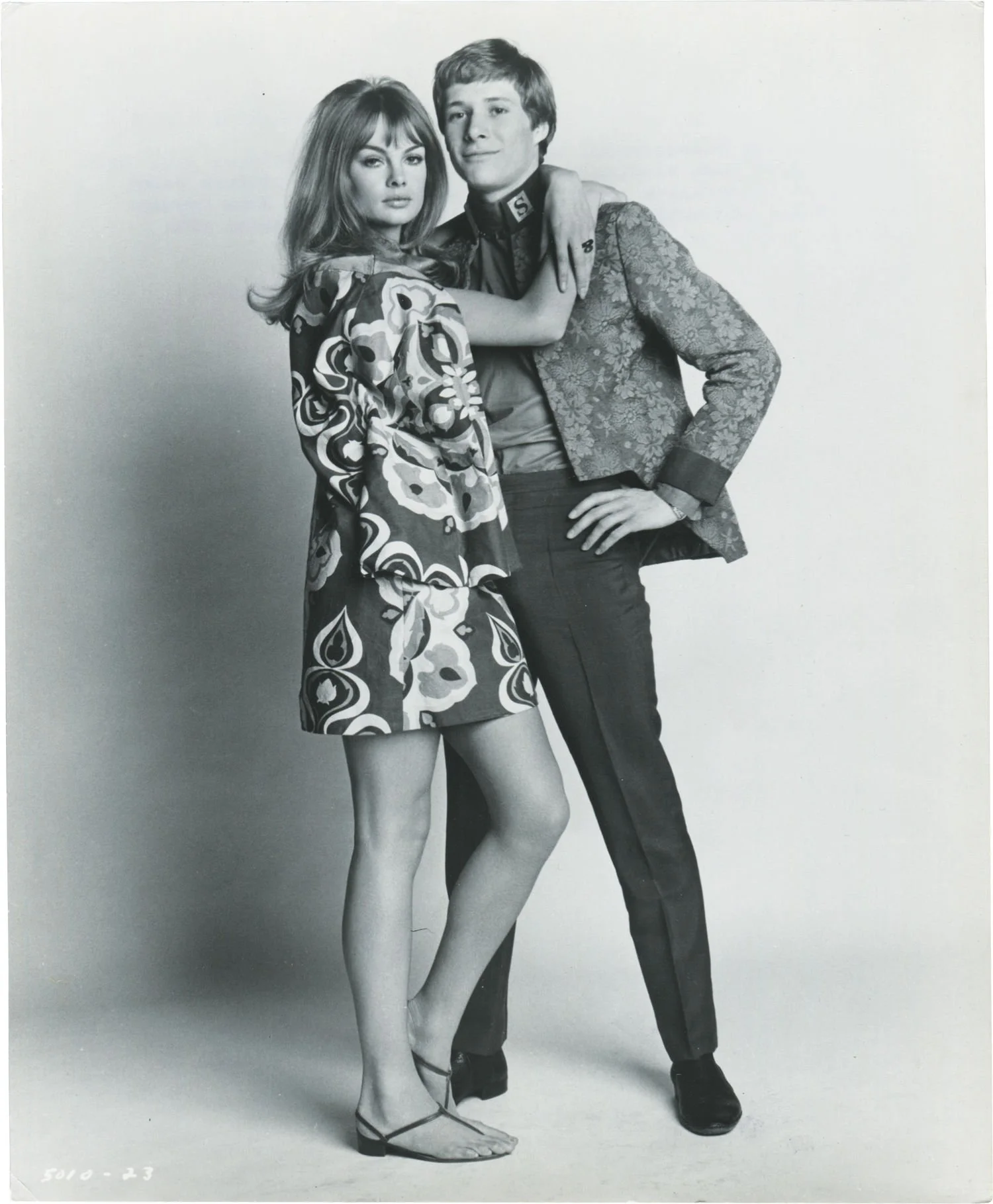
Promotional photo from Privilege, available to purchase here.
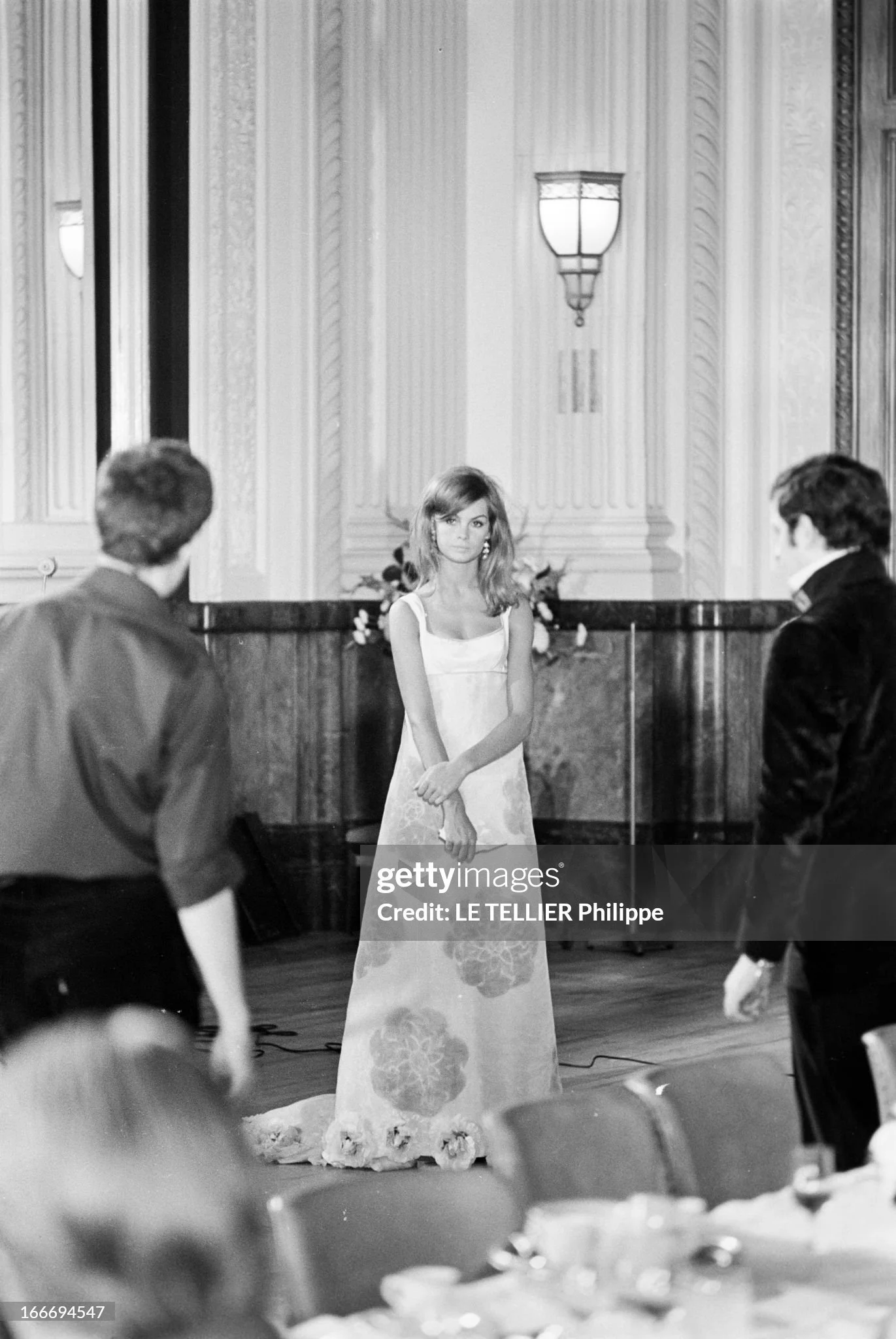
Only the bodice of this evening gown is visible in the film. I had no idea there were flowers!
The world premiere was held on May 4, 1967, at the Warner Theatre in London. With the movie starring such famous faces from other fields (pop music and fashion), Rank’s marketing department worked hard to transcend the attacking reviews; among the promotional efforts were “IMPRESSIVE West End window displays, a controversial book, music rapidly climbing the hit parade, and ultra-modern fashion creations.” As mentioned in the above Petticoat article, a “Privilege dress collection” was launched at the same time by Alexander Green. One of Britain’s top manufacturers of children’s wear, Alexander Green had been quick to take advantage of the desire for pre-teens and young teens interested in the Dolly mod look—the company had previously collaborated on a line with TV presenter Cathy McGowen and hired Kiki Byrne as one of its main designers in 1965, so the desire and ability to translate Vanessa Clarke’s costume designs for production is unsurprising. As part of the marketing, “A superb show card illustrates Privilege dress collection, copies of which have been circulated to Alexander Green stockists throughout country, many whom given sizeable window space the tie-up”—likely far more people saw the clothes than saw the film, which was found too controversial for most markets.
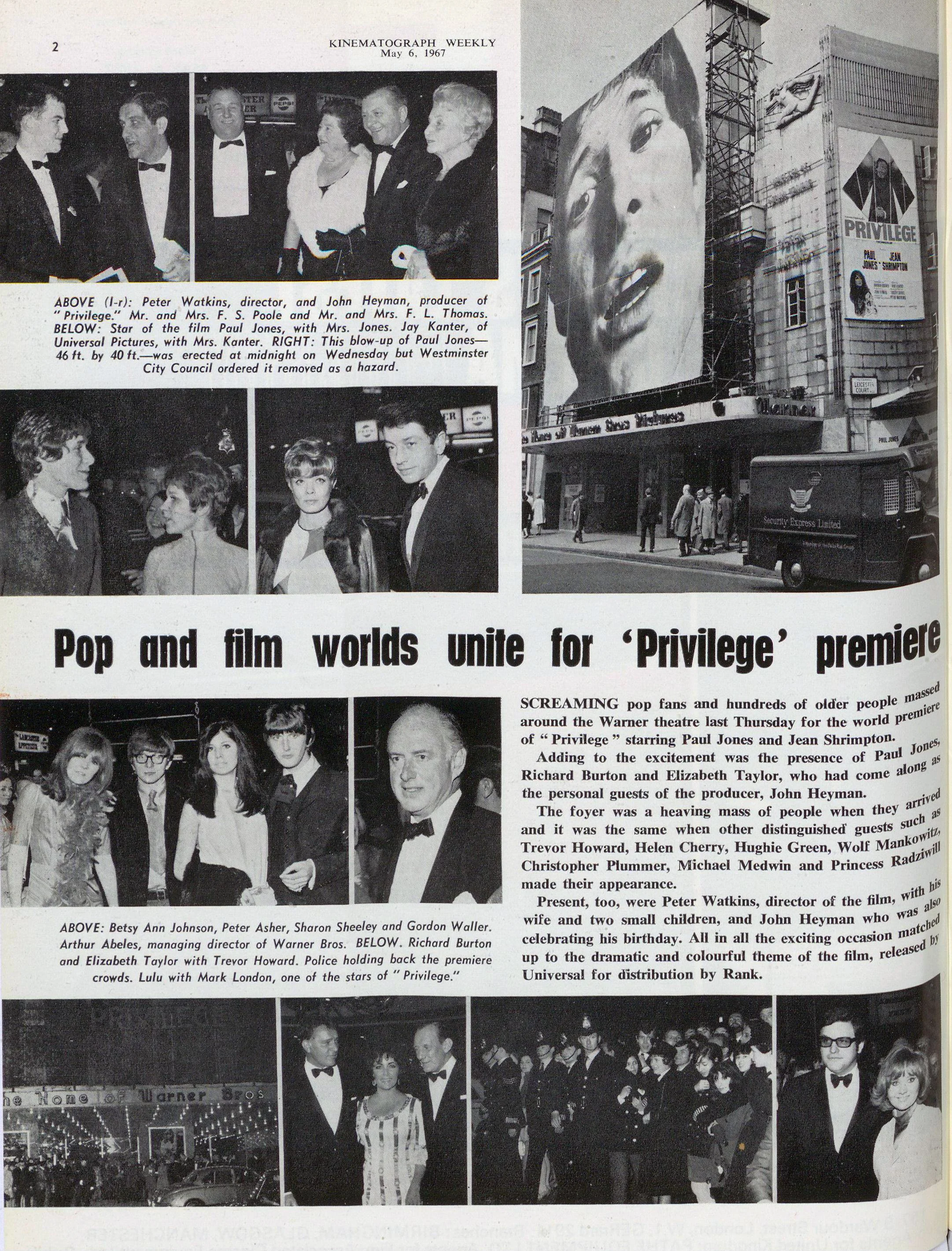
Photos from the Privilege premiere, Kinetograph Weekly, May 6, 1967.
Just a month later, Vanessa Clarke traveled to New York as one of the contestants for the Yardley “London Look” Award. For the third year of this award (previous winners were Roger Nelson and John Bates of Jean Varon), the beauty company flew six London fashion designers—all under 30—to New York to compete. The sole costume designer, Vanessa showed her designs alongside Janice Wainwright, Franka, Alun Hughes, Bill Gibb, and Hylan Booker, in front of a panel of judges pulled from the American fashion press at a luncheon at the Plaza on June 7, 1967. Jean Shrimpton, then the face of Yardley, presented the award to Hylan Booker, with Hughes and Wainwright coming in second and third place, respectively. A journalist who attended the event said that, based on the ten designs featured, Clarke “prefers tailored daytime dresses and midriffs and side-baring pant suits, a bra top centered by feathered flowers, short pants and solid colored jackets.” It is likely that Clarke’s inclusion was another part of Rank’s publicity strategy—with Shrimpton promoting both Privilege and Yardley at the time, this was simply another method for publicizing Privilege as a “fashion film.”
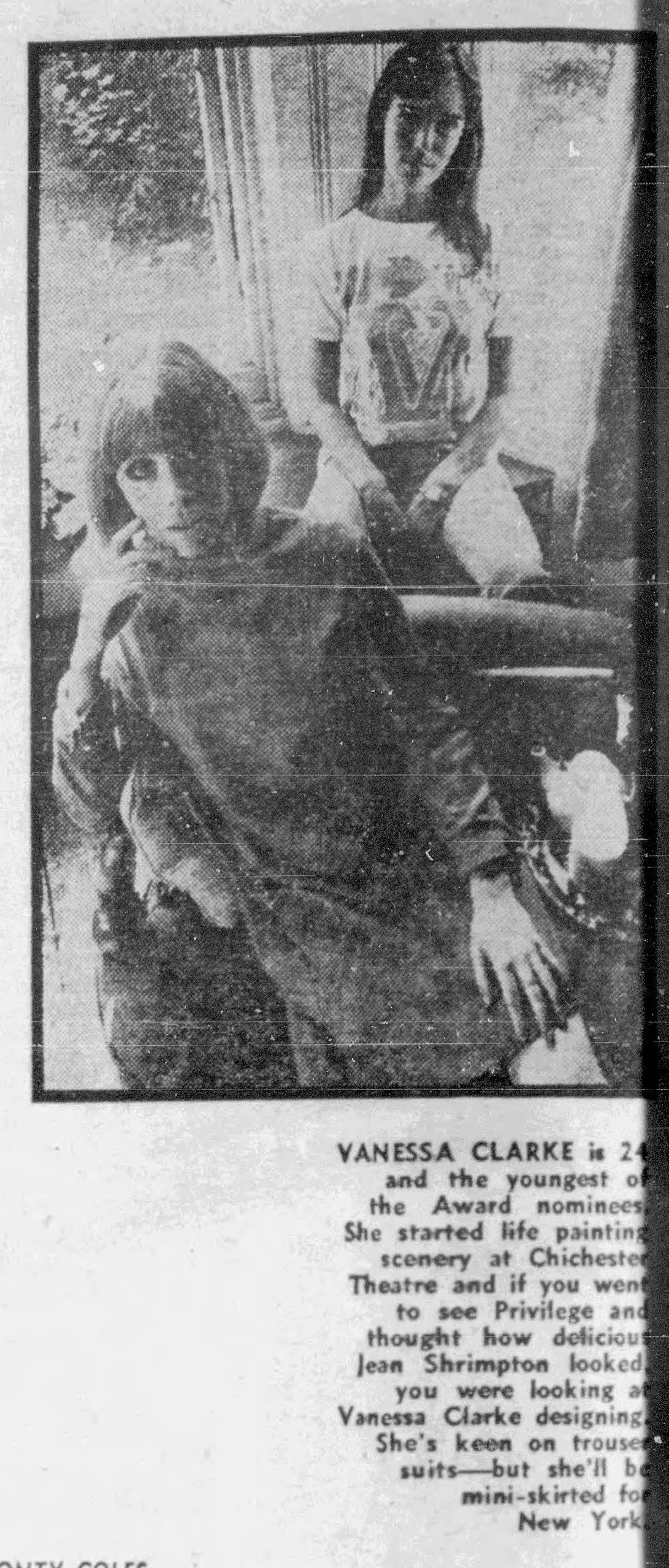
Vanessa Clarke and a model wearing one of her designs for the Yardley Award. Photo by Monty Coles, Evening Standard, June 5, 1967.
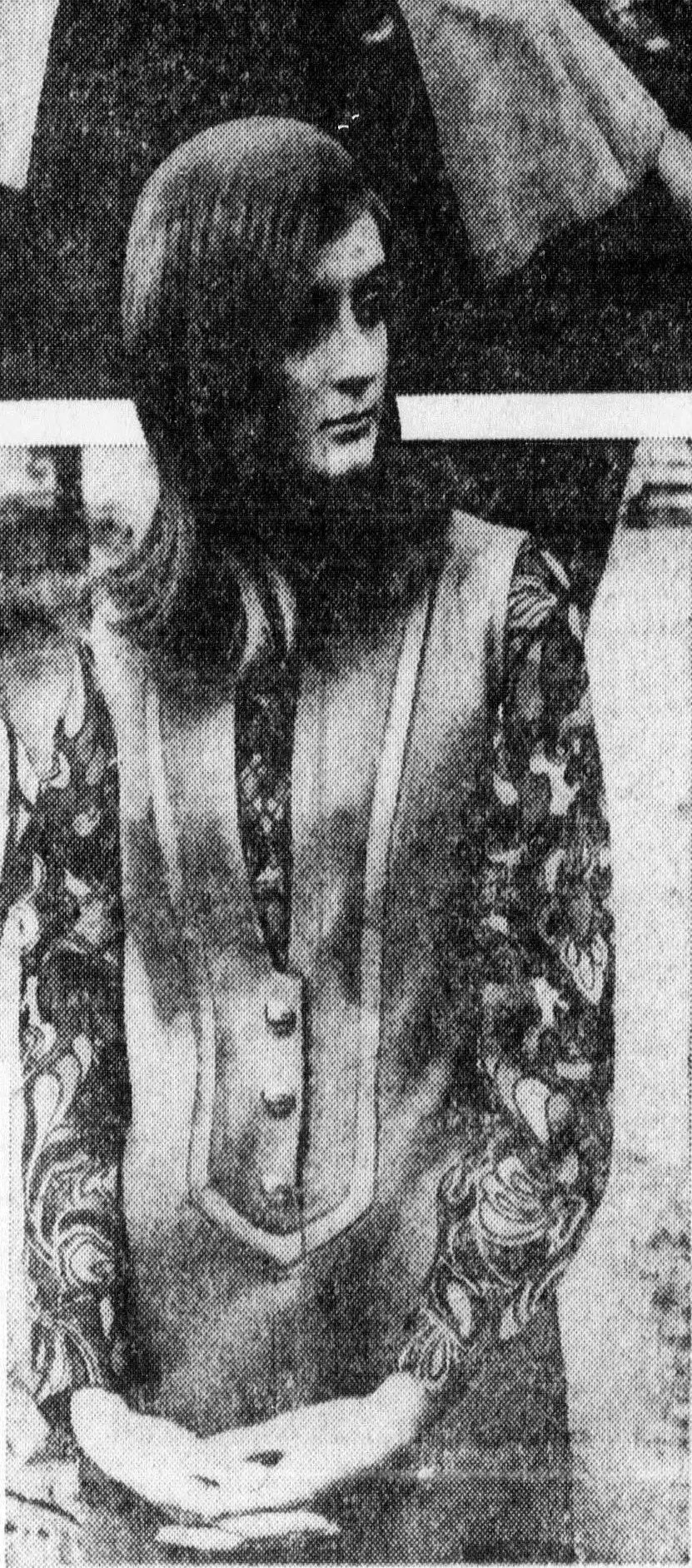
A model in another look Vanessa Clarke submitted for the Award. Pittsburgh Press, June 4, 1967.
After the Yardley Awards, Vanessa Clarke disappears. Her one other IMDB credit for 1967, an episode of Doctor Who, aired April 1st; following that, her next credit is in 1984. As so often happens with women, a marriage and a name change can make them disappear, so I began searching through marriage records. I found one from September 1971 for a Vanessa A. Clarke to a John Holding, in Wandsworth, south London. While this is possibly/likely her, I can’t prove it—I wasn’t able to find any further information about this couple or anything under the name “Vanessa Holding.” I do think it is likely that she married (whether John Holding or someone else) and had children, maybe working freelance or part-time on costumes at the BBC or on movie productions—not as the costume designer in charge, but more assisting while raising children. Then, it appears, once they were old enough, she returned to working more full-time. Her first film back as a costume designer was the 1984 British film, Space Riders, about and starring Grand Prix motorcycle racing world champion Barry Sheene as himself. Two years later, Clarke worked on another British film, the comedy Car Trouble. Neither received particularly good reviews or large releases; links to watch both on YouTube are below. There is one more film listed on her IMDB, The Return of Sam McCloud, a 1989 American TV movie filmed in New Mexico; while I can’t prove that it isn’t the same Vanessa Clarke, somehow it seems unlikely given her whole career up to this point. Regardless, in the late 1980s, Vanessa Clarke again disappears—no more TV or movie credits, no newspaper mentions.
There’s nothing nefarious about this mystery; as I said, it’s likely that she, like so many other women, put marriage and children before their career. Clarke could have also found her brief moment of publicity—press for Privilege, the Yardley “London Look” Awards—too much for her, and realized she preferred a life completely behind the scenes. While I might have loved to see more of her costumes or see where she could have taken Shrimpton’s Privilege looks if provided a fashion platform, I hope that her “disappearance” was her choice.
Some screenshots from Privilege:
Laura McLaws Helms is a fashion and cultural historian available for consulting on film, television, publishing, and brand projects. Contact her here.